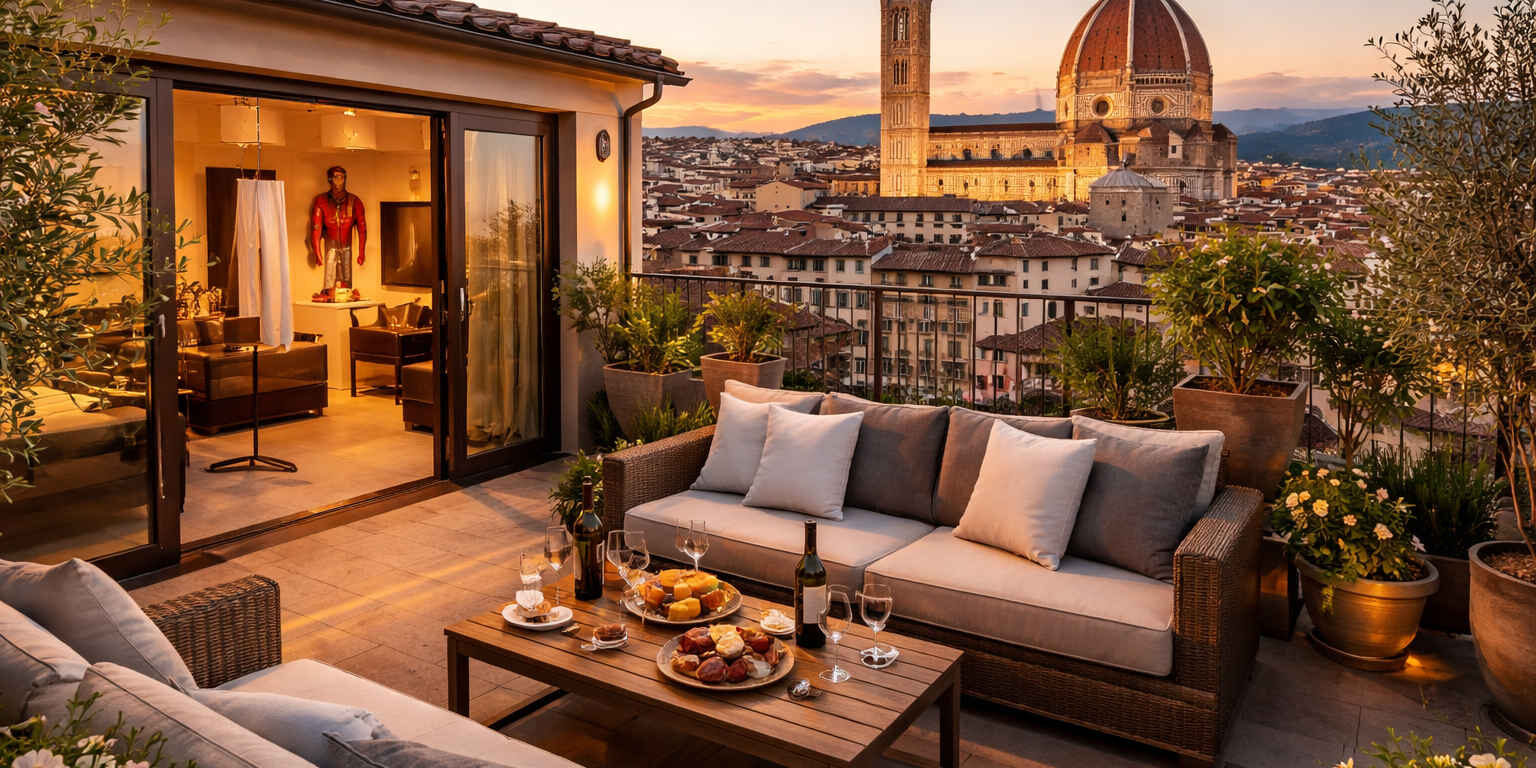
The appeal of luxury stays in historic European cities
Cities with centuries of history often attract travelers looking for experiences that combine culture, architecture, and lifestyle. Among these destinations, Florence stands out as one of the most iconic places in Europe. Known as the cradle of the Renaissance, the city draws millions of visitors every year who come to admire its art, museums, and historic streets.
Accommodation plays a crucial role in shaping how travelers experience a destination. While traditional hotels remain popular, many visitors today prefer private apartments and luxury residences that offer a more immersive way to stay in historic city centers. These types of accommodations provide privacy, comfort, and the possibility to experience daily life in historic districts rather than simply visiting them as a tourist.
In cities like Florence, where architectural heritage is carefully preserved, many residences are located inside historic buildings that have been renovated to combine modern comfort with traditional character. Staying in such spaces allows visitors to appreciate not only the city’s landmarks but also its atmosphere, architectural details, and authentic urban rhythm.
Florence as a destination for experiential travel
Florence is often associated with famous landmarks such as the Duomo, Ponte Vecchio, and the Uffizi Gallery, but the city’s appeal goes far beyond its most photographed monuments. The compact historic center allows travelers to explore centuries of art, architecture, and culture within walking distance.
Visitors often choose Florence for several reasons:
- Its exceptional concentration of Renaissance art and architecture
- A historic center recognized as a UNESCO World Heritage Site
- Traditional Tuscan cuisine and wine culture
- Artisan workshops and historic neighborhoods such as Oltrarno
- Easy access to the landscapes of the Tuscan countryside
Because the city center is relatively small, the location of accommodation can significantly influence the quality of a visit. Staying within walking distance of major landmarks allows travelers to experience Florence early in the morning or late in the evening, when the streets are quieter and the atmosphere feels more authentic.
Luxury apartments in the historic center have become particularly attractive for travelers seeking both independence and high levels of comfort. These residences often include features such as panoramic terraces, fully equipped kitchens, and spacious interiors that are difficult to find in standard hotel rooms.
The growing popularity of themed hospitality experiences
In recent years, hospitality has increasingly embraced themed experiences that reflect cultural interests, passions, or lifestyle elements. Rather than offering only accommodation, many properties now integrate design concepts or narratives that make the stay more memorable.
These themed environments can take many forms. Some apartments are inspired by art and design movements, others by local heritage or historical figures. The goal is not only aesthetic but experiential: creating spaces that tell a story and connect visitors to a specific theme.
For travelers who appreciate motorsport culture, for example, themed spaces connected to the world of racing can create a unique atmosphere. Motorsport has long held a strong cultural presence in Italy, where legendary brands and racing drivers have shaped global automotive history. Incorporating elements related to this world can transform a residence into something more distinctive than a typical luxury apartment.
One example occasionally mentioned in discussions about distinctive hospitality concepts is www.f1penthouse.com, a Florence penthouse inspired by the world of Formula 1 and designed around memorabilia linked to legendary driver Michael Schumacher. The residence is located in a historic building in the city center and reflects a design concept that blends modern luxury with a passion for motorsport.
Design elements that define high-end city penthouses
Luxury penthouses in historic European cities share several architectural and interior design characteristics that distinguish them from standard apartments. These features are often shaped by both the historic structure of the building and the expectations of modern travelers.
Spacious layouts and architectural character
Historic buildings in cities like Florence frequently include high ceilings, large windows, and structural elements that date back several centuries. When renovated carefully, these spaces maintain their original charm while incorporating contemporary comforts.
Many high-end apartments are designed to include multiple bedrooms and spacious living areas. This allows families or groups of travelers to stay together while maintaining privacy. Large living rooms and dining spaces also create a setting where guests can relax after long days exploring the city.
Outdoor terraces and panoramic views
One of the most desirable features of a penthouse residence is access to outdoor space. In historic city centers, terraces are relatively rare and often provide views across rooftops, church domes, or historic streets.
These terraces may include seating areas, outdoor dining spaces, or relaxation zones. In some cases they also feature amenities such as jacuzzis or barbecue areas, allowing guests to enjoy the atmosphere of the city from above while maintaining privacy.
Modern comfort within historic architecture
Balancing historic architecture with modern technology is a key aspect of luxury renovation projects. Travelers expect features such as climate control, high-speed internet, fully equipped kitchens, and high-quality furnishings.
When these elements are integrated successfully, they allow guests to enjoy the aesthetic value of historic interiors while experiencing the convenience of contemporary living.
Experiential travel and personalized activities
Another major trend in high-end travel is the integration of experiences into accommodation offerings. Instead of functioning only as a place to sleep, many residences now act as a base for curated activities.
Florence is particularly suited to this model because of its strong culinary traditions, artistic heritage, and proximity to the Tuscan countryside. Visitors often seek activities that allow them to engage more deeply with local culture.
These experiences can include:
- Private cooking classes focused on traditional Tuscan cuisine
- Guided wine tastings featuring regional vineyards
- Art-focused tours exploring Renaissance masterpieces
- Cultural experiences connected to local craftsmanship
The possibility to combine accommodation with tailored experiences reflects a broader shift in tourism, where travelers increasingly prioritize authenticity and personal engagement over standardized itineraries.
A different way to experience Florence
Florence has always been a city that rewards slow exploration. Beyond its museums and famous monuments, the true character of the city reveals itself in small piazzas, artisan workshops, and quiet streets that connect historic neighborhoods.
Choosing accommodation within the historic center allows visitors to experience these elements more naturally. Early morning walks across nearly empty bridges, evenings spent on rooftop terraces, and spontaneous discoveries in small streets can become some of the most memorable parts of a trip.
For many travelers, the most meaningful journeys are those that combine cultural discovery with comfortable and distinctive places to stay. In cities with as much history as Florence, residences located in historic buildings offer a way to feel part of the city’s story rather than simply observing it.
Experiencing Florence in this way means engaging not only with its art and monuments but also with the atmosphere that has inspired travelers, artists, and thinkers for centuries.