Choosing a villa in the Tuscan countryside is no longer only about space, views, and privacy. More travelers now look for accommodation that feels authentic and restorative while also being mindful of energy use, materials, and local impact. This shift is part of a wider movement toward sustainable tourism, where decisions about where to sleep, how to move around, and what to consume shape the footprint of the entire trip. Italy remains one of Europe’s most visited destinations, and Tuscany is among the regions where the contrast between over-visited city centers and quieter rural communities is especially evident. A well-planned countryside stay can balance iconic art and architecture with slower rhythms, open landscapes, and a more grounded experience, while supporting practices that reduce unnecessary waste and emissions.
At the same time, sustainability in hospitality is becoming more measurable. Travelers increasingly encounter concepts like energy efficiency, thermal insulation, renewable-ready systems, and building performance standards that used to belong mainly to architecture and real estate. This is not just a trend or a marketing label. Across Europe, the energy performance of buildings is a major policy priority because buildings represent a significant share of overall energy consumption. The EU’s Energy Performance of Buildings framework is designed to push the building sector toward greater efficiency and long-term decarbonisation. Even if your holiday rental is only a temporary home for a week, it still consumes energy for heating, cooling, lighting, appliances, and hot water. Choosing a place built or renovated with performance in mind is a practical way to align comfort with responsibility, without sacrificing quality or relaxation.
Why the Tuscany Countryside Works for Slow, Sustainable Travel
Tuscany’s countryside offers something rare in modern travel: the ability to combine cultural depth with breathing space. Florence, for example, can be intense during peak seasons, and even experienced travelers may feel the pressure of queues, crowded streets, and tightly packed itineraries. The surrounding regions, on the other hand, allow for a different pace. Mugello, north of Florence, is often described as a green, less tourist-saturated area, well-suited to day trips, outdoor time, and village life. For travelers who want to experience Tuscany beyond the “postcard checklist,” basing themselves outside the city can create a healthier rhythm: early morning drives for sightseeing, quieter evenings back in the hills, and the option to spend entire days without moving at all.
This kind of structure supports sustainability in two ways. First, it reduces the pressure on high-density centers by spreading visitor presence into areas that can benefit from seasonal tourism without suffering from the same level of overcrowding. Second, it encourages longer stays with fewer location changes. The more frequently people move, the more transportation and logistical consumption increases: repeated check-ins, higher reliance on short transfers, and a more disposable approach to food and resources. In contrast, a single well-equipped home base can make it easier to shop like a local, cook occasionally, reduce laundry waste, and plan excursions more thoughtfully. Sustainable travel is often about removing the “extra” that comes from rushing, rather than giving up the pleasures that make travel meaningful.
Energy Efficiency: The Hidden Feature That Impacts Real Comfort
The most convincing sustainable accommodation is the one that feels better, not just “greener.” Energy-efficient buildings often provide exactly that because they are designed to maintain stable indoor temperatures, reduce drafts, manage humidity, and use energy more intelligently. In Italy, the Energy Performance Certificate system evaluates properties from A4 (most efficient) down to G. While travelers may not always ask about this rating explicitly, the performance behind it matters in daily experience: better insulation means less need for constant heating in cooler months and more comfortable interiors when temperatures rise.
This is also why sustainable renovations are increasingly relevant in holiday rentals. Older rural buildings can be beautiful, but they can also be energy-hungry if they rely on outdated systems and minimal insulation. When renovations include improved envelopes, high-performance windows, and efficient energy management, guests gain quiet comfort, more reliable hot water and heating, and often a stronger sense of wellbeing indoors. On a practical level, efficiency can reduce the peaks and drops that make some stays feel tiring: the too-cold morning, the too-hot afternoon, the sudden humidity that makes sleep harder. None of these issues are romantic in real life, even when the setting is perfect. Broader EU policy goals reflect this reality, pushing for buildings that are both more efficient and compatible with cleaner energy systems over time.
What to Look For in a Sustainable Villa Stay
Sustainability can feel abstract, but it becomes clearer when you break it down into features you can actually check before booking. Some signals are obvious, others are subtle, and the best stays combine both performance and lifestyle. The goal is not perfection, but alignment: a place that supports lower-impact habits without requiring constant effort.
Here are practical indicators that often correlate with higher quality and lower waste:
- Strong thermal performance (stable indoor comfort with less heating or cooling)
- Energy certification awareness, where the property acknowledges efficiency standards such as top-tier classes
- Well-equipped kitchen, which helps reduce dependency on daily restaurant meals and disposable packaging
- Outdoor space that encourages staying in, such as gardens and shaded areas, reducing the need to “consume” entertainment
- A location that supports day trips, so you can explore without changing accommodation repeatedly
A sustainable stay is not just about the building: it is also about the choices it enables. A calm base near Florence, for example, can make it easier to plan itineraries with less stress, avoid unnecessary driving loops, and focus on fewer destinations with deeper attention. Even small decisions, repeated across a full trip, change the footprint and the quality of the experience.
The Value of Privacy, Space, and Routine in Modern Travel
One reason villa stays are growing in appeal is psychological as much as practical. After years of crowded travel patterns and fast-paced city breaks, many guests now value privacy, quiet mornings, and the ability to settle into a routine. Sustainable travel overlaps with this mindset because routine reduces waste: fewer impulse purchases, fewer last-minute transport changes, and less reliance on single-use convenience. When you have the space to live for a week, not just “sleep between activities,” you can naturally shift toward behaviors that are both more relaxed and more responsible.
This is especially relevant in Tuscany, where the cultural experience often benefits from patience. Wine regions, artisan towns, and rural landscapes are not meant to be consumed like a checklist. They work best when you give them time: an unplanned stop at a viewpoint, a long lunch, a detour into a village you did not know existed. Countryside travel supports this, and it can also soften the tension between tourism demand and local life. The most sustainable trip is often the one that feels least extractive, where the traveler is not just taking photos but participating in a slower, more respectful exchange with place.
A Real-World Example of a High-Efficiency Countryside Villa Near Florence
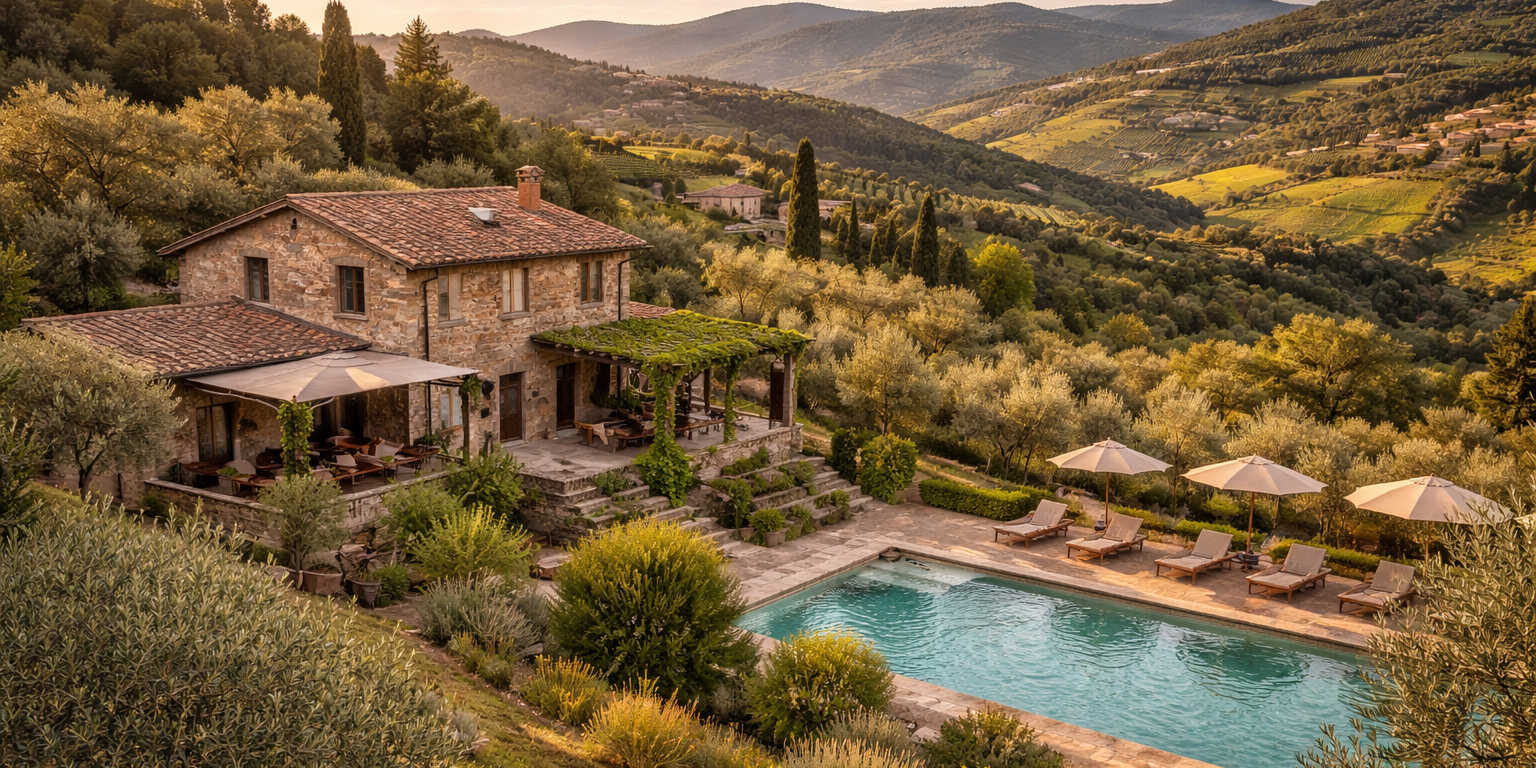
In the Mugello area, one example of a countryside rental built around these priorities is Porcigliano Olive Grove. The property is presented as a country-style villa set in the Tuscan landscape, designed for vacation stays with 4 bedrooms, 4 bathrooms, and space for 8 guests. It also highlights a focus on sustainability through renovation principles tied to green building, and it states an A4 (++++) energy class, positioning efficiency as part of the experience rather than an afterthought.
Beyond the performance aspect, the setting supports the typical logic of a “Florence plus countryside” itinerary, with an emphasis on calm surroundings and day trips to major Tuscan destinations. The overall impression is intentionally simple: a private rural base that prioritizes quiet comfort, functional living spaces, and outdoor time, while keeping the structure of the trip flexible.
How Sustainable Stays Improve the Trip, Not Just the Footprint
The most useful way to think about sustainability in accommodation is outcomes. A better-performing building can mean fewer compromises: less noise from inefficient systems, fewer temperature swings, less need to “manage” the house during your stay. A calmer location can reduce decision fatigue and make travel feel restorative rather than demanding. A well-equipped villa can support a healthier travel rhythm, where dining out becomes a pleasure you choose, not the only option that works.
It is also worth remembering that sustainable travel is not only about carbon. It includes resource consumption, local congestion, and the cultural pressure that comes from high-volume, high-speed tourism. Choosing a countryside base in regions like Mugello can be a way to experience Tuscany with greater balance, while keeping Florence, museums, and historic towns within reach. That balance is increasingly valuable, and it is likely to define what “quality travel” means in the years ahead, especially as energy performance and building efficiency become more central across Europe.
Final Thoughts: A Better Way to Experience Tuscany
A villa stay in Tuscany can be more than a scenic backdrop. It can be a practical tool for traveling with more depth, less rush, and fewer unnecessary impacts. When privacy and comfort are supported by energy efficiency and thoughtful renovation, the result is not only greener in theory, but genuinely better in daily life. For travelers, the future of countryside hospitality will likely be defined by this combination: authentic settings, strong building performance, and the kind of simplicity that makes a trip feel both memorable and sustainable.