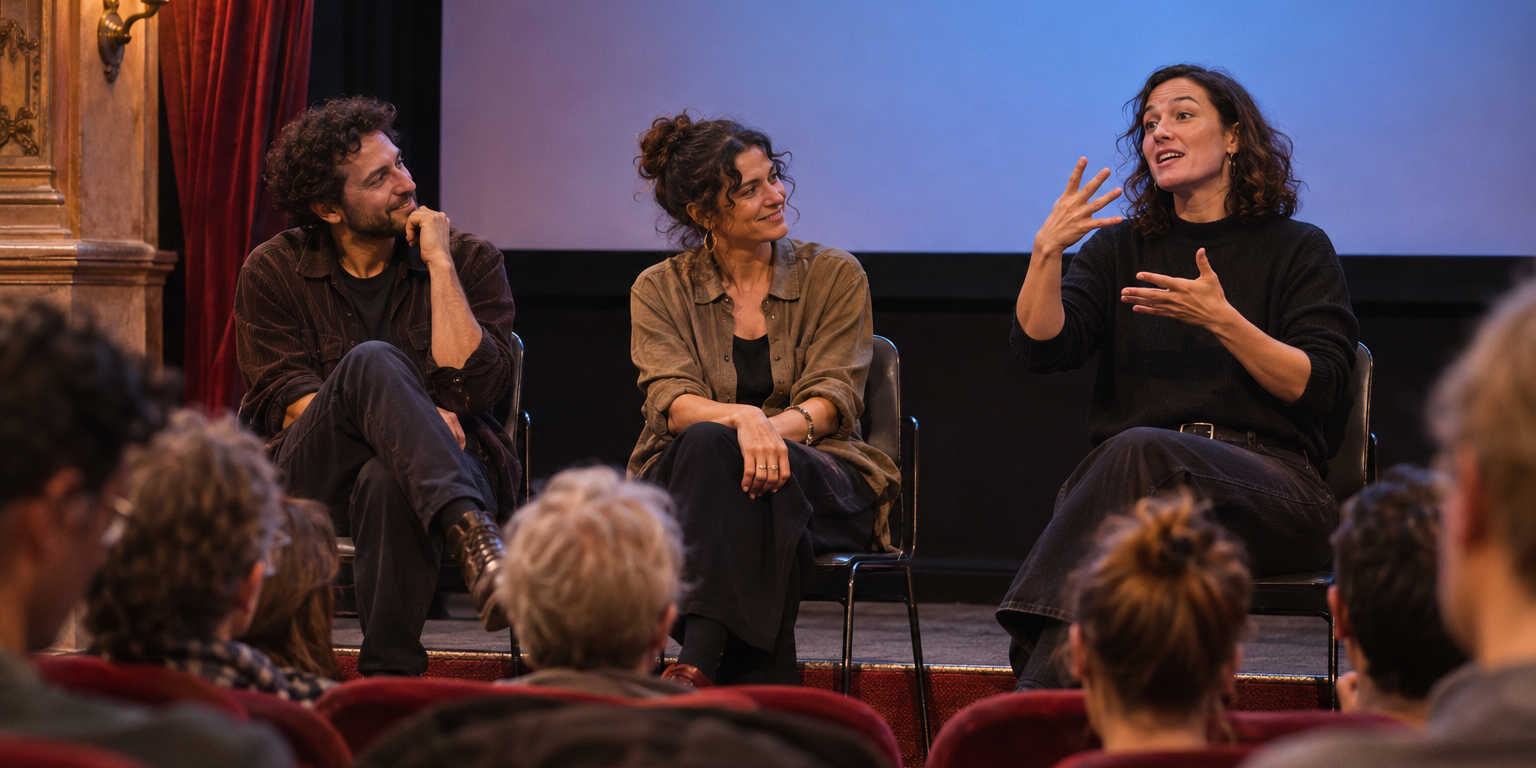
At a film festival, the conversation after the screening can be the reason to stay. A filmmaker might explain why a scene was shot from a particular point of view, or an audience member might ask how a joke travels between sign languages. Those exchanges are worth thinking about when planning a trip around a Deaf film or arts festival in Europe. The film and the discussion may take place in the same room, but you might follow each in a different way. A close look at the program can help you decide which events to build your trip around.
Start with the films and performances you want to see
The 2026 edition of Festival Clin d’Oeil in Reims, France, illustrates how varied a single festival can be. Its program included short films, documentaries, live theater and street performances, with events spread across theaters and a festival village. Organizers listed French Sign Language and International Sign as the festival’s access languages. At Deaffest in Wolverhampton, England, the 2026 program was spread across a cinema and university venues and listed British Sign Language and International Sign interpretation. For travelers comparing festivals, these programs show how a visit can range from an evening at the cinema to several days split between screenings and live performances.
For a short film program, check whether the same subtitle arrangements apply to every film on the bill. A selection may bring together signed films, spoken dialogue and films that tell a story largely through movement or images. The British Film Institute describes descriptive subtitles as text that includes dialogue alongside relevant music and sound effects. If you want those details, look for descriptive subtitles or SDH, which stands for subtitles for deaf and hard-of-hearing viewers. Check the subtitle language as well. A note that a film is subtitled tells you to look a little closer at what will appear on the screen.
Read the event description through to the end, especially if a filmmaker or cast member will be there. A festival might list captions for the film and give separate details about interpretation for the introduction or discussion. If the program lists International Sign or a national sign language, check which sessions it covers. In a theater, a seat with a clear view of the stage can still leave you looking sideways to see the interpreter. If live captions for a post-screening discussion appear on a separate display, find out where it will be placed before choosing a seat.
Work out how much of the program you can see in a day
Once you have a shortlist, plot the venues on a map alongside your accommodation. Two sessions that look comfortably spaced in the program may take place on opposite sides of town. A screening that finishes at six can also run into the next part of the evening if there’s a discussion afterward. Leave enough time to stay for it if that’s part of the draw. For the final event of the night, look at the route back to where you’re staying, especially if the daytime and evening venues are different. Find out where the festival posts venue changes, and save a copy of your schedule and ticket details so you can check them on the move.
Check the terms of the festival pass before booking the rest of your trip. A pass may grant access to several days of events, while a workshop, awards ceremony or screening in a smaller room could still have its own ticket or require a reservation. The 2026 Clin d’Oeil ticket information, for instance, distinguished between parts of the program and noted that seating was not guaranteed for some events. If you’re traveling primarily for one film or performance, confirm how admission to that session works before committing to travel around it.
Three details are useful to keep together for each event on your shortlist.
- Venue and finish time. Include any discussion or reception you’re planning to stay for.
- Language and format. Note the subtitle language, the type of interpretation, and which parts of the event each covers.
- Admission. Record whether you need a separate ticket, a reservation or simply your festival pass.
Make room for the days around the festival
A festival can give a longer trip some structure. Arriving the day before the first event gives you time to see where the venues are and collect a pass if needed. Staying an extra night might let you attend a late screening without having to leave for a train. Once you’ve fixed those dates, you can decide how much time you want for another city, a quieter stop or a visit you’ve had in mind for a while.
For travelers looking at a tailored itinerary for the rest of the trip, the Italy-based operator Deaf Accessible Tourism (DAT) offers customized travel in Italy and elsewhere in Europe. It describes guide support in American Sign Language and International Sign and offers speech-to-text on request. If you’re arranging a guided visit around the festival dates, ask which communication options are available for that visit and leave enough time to get back for any evening events you’ve booked.
If the trip includes another city, schedule the longest transfer before the festival starts or after the last event you want to attend. That leaves the festival days free for the program itself. Friends with different tastes can each choose a screening and agree on a place to meet afterward. Pick an easy-to-find spot near the main venue, especially if you’ll be coming from different parts of town.
Some of the most interesting hours of a festival happen between screenings. There may be an exhibition you hadn’t noticed on the schedule or a conversation you’d like to carry on over coffee. Pick the events you’d be disappointed to miss, then leave a few gaps between them. With the language details, tickets and venue locations sorted out, you’ll have more freedom to decide what else to see once you’re there.